Avocado-based “Cottage “Bread”

Move over, sourdough. This quick, high-protein avocado “bread” bakes up bready yet creamy on the inside, crisp at the edges, and feels indulgent while being a good source of clean protein for you.
SpokenFood tests a weekday lunch winner and a weekend breakfast sandwich buddy.
Premium Meat Loaf: The Ultimate Comfort Food
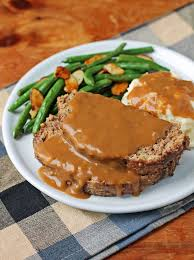
Every great meatloaf starts long before the beef hits the bowl. It begins in the pan — with bacon and a slow-simmered mirepoix coaxed into submission by a splash of wine. The trick? Don’t purée it into baby food — think fine relish, soft enough to disappear, yet vivid enough to leave its fingerprint.
Farmers Are Heroes: The True Start of the Food Chain

Farm prices are set by commodity markets (corn, soy, wheat, pork, beef, poultry, etc.) through the Chicago Mercantile Exchange and other market mechanisms around the world. The husband-and-wife team in California or Iowa or Georgia or Santorini or Shandong province in China…they all absorb the brunt of input costs (fuel, seed, fertilizer, machinery, labor), and they sell into their respective markets where margins are not only razor-thin, but they are also dictated by global supply and demand and political considerations.
Here’s how that trickle-up (and then trickle-down) dynamic looks in the “WalletGate” framework. Let’s start the snowball.
UNFI’s Revenue Jumps 20% – Fuels Gouging Concerns
United Natural Foods, Inc. — better known as UNFI — is one of the silent powerhouses behind many of the products stacked on supermarket shelves. The company supplies everything from organic produce to household staples to grocery giant hubs and independent retailers alike. If you’ve ever filled a cart at Whole Foods or a co-op in the Midwest, odds are, UNFI’s trucks made that possible.
In 2020, amid pandemic disruptions, UNFI reported whopping revenues of $26.55 billion. That was a year of strained supply chains, rising logistics costs, and consumer uncertainty, and it still represented a 19% increase over 2019.
Performance Food Group Revenues TRIPLE

In 2020, PFG reported revenues of $25.1 billion — already a significant footprint.
By 2024, that number had exploded to $62.3 billion. There’s the $37 BIL joyride.
That’s not a recovery. That’s TRIPLE – an astonishing 148% increase in just four years.
It gets even stickier – PFG and US FOODS are in merger talks. In mid-September 2025, PFG announced that it agreed to share confidential financial information with US Foods under a “clean team” process — a common early step in merger talks.
Trust us – there ain’t nothin’ “clean” about any of this.
The Simplest One-Egg Omelette Ever!
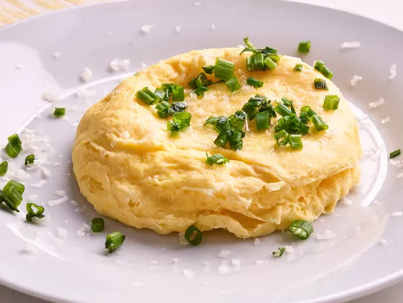
Never before have we come across something so simple and fast, we had to share it here. It’s a one-egg omelette, served in a ramekin. Our source? Who else but that worldwide food influencer and chef-extraordinaire, Jose Andres.
I’ve seen omelette creations for eons, and I’m so set in my technique, it’s simply automatic to me.
US Foods Revenues Surge 66% — While Consumers Pay the Price

In 2020, US Foods reported revenues of $22.8 billion — down from $25.94 billion in 2019 due to pandemic disruptions. Fair enough. But what followed is what should raise every consumer’s eyebrow.
By 2025, just five years later, the company’s annual revenues skyrocketed to $37.877 billion.
That’s not a rebound — that’s a whopping 66% increase. Let that sink in.
While small restaurants shuttered, supply chains “tightened,” and consumers were told price hikes were due to “inflation” and “diesel costs,” US Foods quietly stacked over $15 billion in new annual revenue.
Their primary phone number is (847) 720-8000. Their CEO is David Flitman.
Exposed: Are Food Distributors Jacking America?
2025 needs to be the year someone finally exposes the big distributors in the American grocery industry for raising grocery prices beyond a ridiculous level.
Here at SpokenFood, we’re calling it for what we (and most Americans) believe it is: Price Gouging. We’ve left messages for some of the largest distributors in the U.S. food supply chain and we asked hard questions. Senior Food Analyst, Miles Kincaid, shows why the food industry supply chain’s unspoken policies may very well be taking money from you at the grocery counter–money that rightfully belongs to you and no one else.
We’re not seeking answers this time–we’re getting them.
SYSCO FOODS: THE PROFITS TELL THE STORY

Sysco Foods, one of America’s largest food suppliers, reported $55.3 billion in revenue for 2024, up from $36.7 billion in 2020. That’s roughly a 50% jump in just five years.
Now look at profit: in 2020, Sysco’s gross profit was $1.9 billion. By 2025, it had soared to $10.8 billion.
That’s a 468% increase.
Revenue: $36.7B (2020) → $55.3B (2024) — 50% increase
Gross profit: $1.9B (2020) → $10.8B (2025) — 468% increase
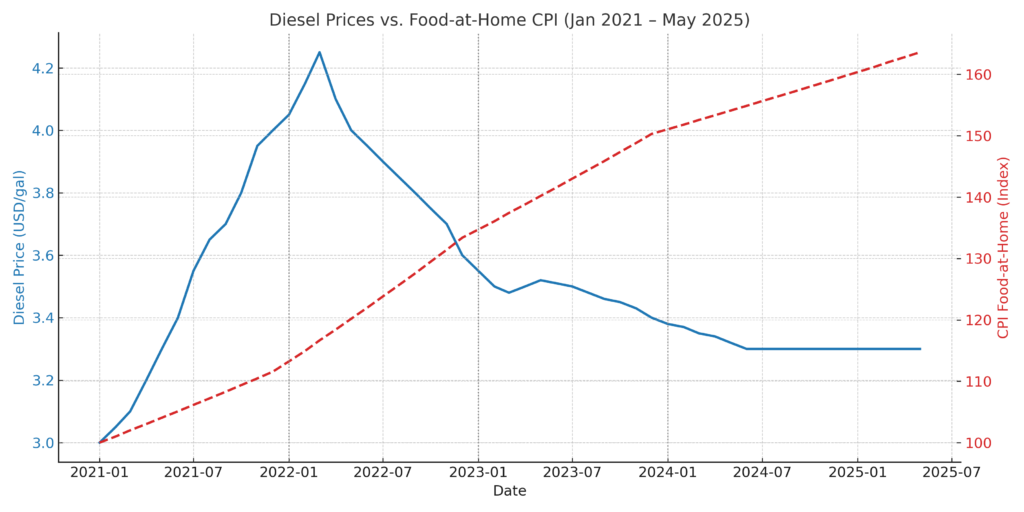
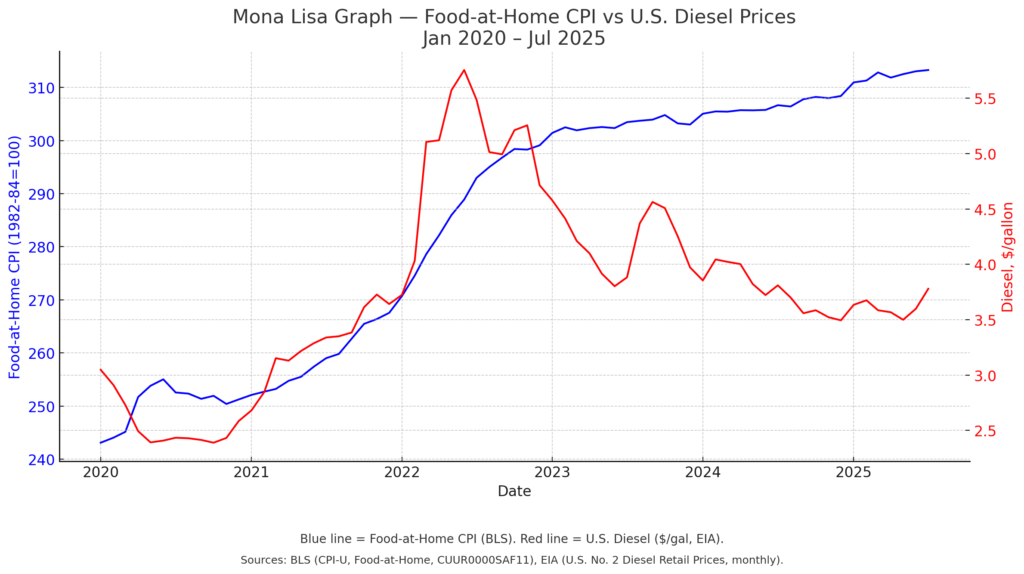
And yet, the cost of food keeps rising. Meanwhile, diesel prices have fallen since their 2022 peak. This makes NO sense.
Yeah… they’re not price-gouging. Sure.
The Best Smokeless Lox Salmon
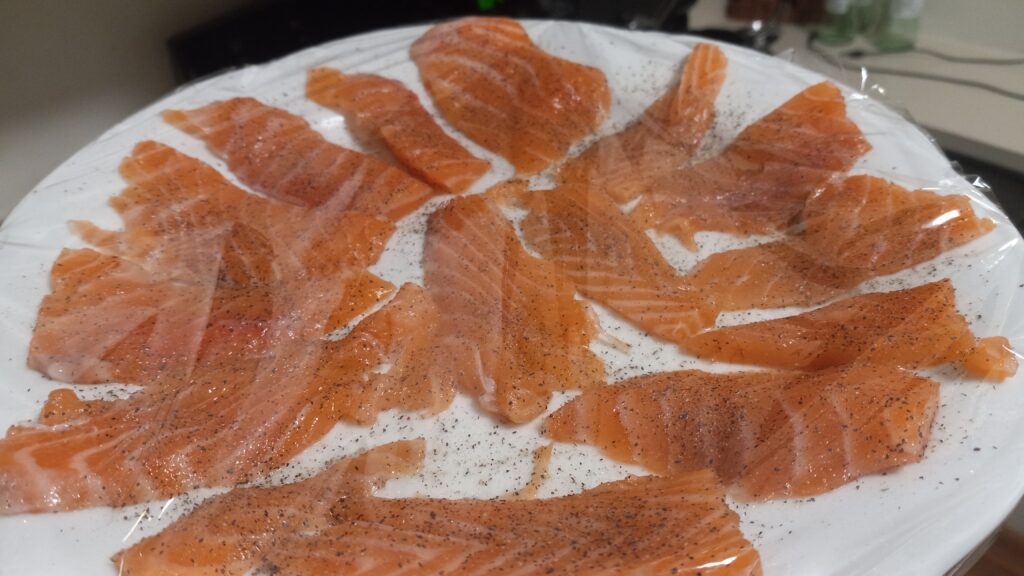
When it comes to weekend mornings, nothing beats freshly smoked lox. Imagine a toasted bagel, loaded with lox salmon, freshly sliced tomato, thinly shaved red onion, capers and a healthy shmear of cream cheese, dotted with a handful of briny capers. Flavor, crunch, richness and smoky protein, all stacked up like a winning breakfast prize, and you hold the ticket.
This is Why It’s Called WALLETGATE

For eighteen straight days, SpokenFood hammered the Federal Trade Commission with evidence of rampant grocery price gouging.
We showed them graphs, data, receipts and hard questions that deserved hard answers. You’ve been paying 30-40% more for your groceries ever since “the new normal” after Covid. Gas prices went down, food costs have never stopped surging upward.
Four separate messages went into the FTC’s Office of Public Affairs inbox. Four separate times, we asked the same thing: Why are American families being gutted at the checkout line while food distributors post record profits?
Restaurant Review – Jersey Mike’s Subs
Way back before SpokenFood.com there was a blog site called ‘JackBlogsFood’. This is one of our original reviews from 2014. The Jersey Mike’s store in Woodbury, MN liked it so much, they laminated it and taped it to the wall in the back, so JM employees could see they were appreciated. And so it goes to this day.
Food Plant Fires Are Suspect
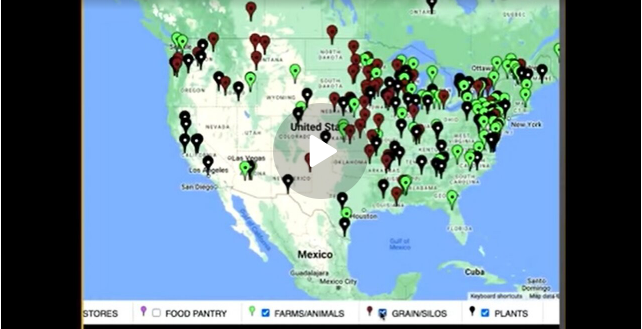
In all of 2021, there were approximately 10 plant fires or destructive “incidents.” In 2022, that number jumped to 87. EIGHTY-SEVEN!
That’s a grand total of 97 food manufacturing facilities destroyed by fire in 2021-2022 alone.
Were the majority of these plants–a full 85-90%–destroyed intentionally?
I don’t have to don my Nancy Drew hat to riddle that one. Every year, there are roughly six to 12 food manufacturing “destruction events” that take place. It’s just the nature of the steel beast in manufacturing. Think about it: High voltage electricity, concentrated tanks of ammonia for cooling/freezing, gas lines everywhere, fork trucks that run on propane and for the ones that run on batteries, those bad boys weigh upwards of 1/2 ton apiece and when they explode, you will pray to your personal savior to spare you.
Danger abounds, which is why OSHA and plant safety managers have a job.
BigFood: Who’s Talking?!

As the old story goes in news circles, when you hear something once, you dismiss it. Hear it twice, you keep your ear to the ground. Three times and you’re digging with a shovel.
BigFood wants this kept on the down-low and just like that secret organization you hear so often about in movies, the food supply chain industry has sent a quiet, clandestine warning to everyone involved: “Keep your (insert expletive here) mouth shut.”
What we’ve proven in the past month, speaking to dozens of sources in BigFood, is that nearly everyone is price-gouging and those who might not be know who is doing it.
…and no one is opening a mouth about it.
Think the Mafia has anything on BigFood? Read on.
Food Cartels in America
“The food industry is just full of cartels. And that’s what cartels do…they gouge.”
– Austin Frerick in his book, “Barons: Money, Power and the Corruption of America’s Food Industry.”
Austin Frerick was right. The food suppliers in this country are gouging. They know it and we know it. Everyone is talking about it, but no one seems to know what to do, who to turn to, who to blame. There was an article written almost a year ago where I first saw that phrase: Greedflation. It feels about as good to say as “Shrinkflation” or “WalletGate,” because they all mean the same thing.
Someone is robbing us in broad daylight and there’s nothing we can do about it. The cops won’t be answering this call. No one is coming to save the American consumer. Pure baloney.
“Food Giants Are Struggling”–PART II

Food is a necessity, not a luxury. Better yet, think of it as a utility, just like your water and light bill. So, what is an “adequate profit margin?” How much profit is sufficient? What determines a company’s ability to continue providing food to the American table–again, a necessity, not a luxury? The better answer, and one they’ll never tell you, is what are their respective, estimated profit margin percentages as determined by their annual budget forecasts? The reason they won’t tell you is because one thing is built into every company’s annual budget is EXECUTIVE COMPENSATION–all caps.
In most cases, it’s gross overcompensation. This is an issue that has gone on across American industry since we became a republic…so, how much is enough?
Take Kraft Foods and Heinz, for example.
Barron’s Headline: “Food Giants Are Struggling”
I nearly spit out my coffee. These multi-multi BILLION dollar companies are now claiming that they are struggling financially?
Writer Evie Liu of Barron’s states in her article, “The industry behemoths are scrambling to adapt—through mergers, acquisitions, spinoffs, and asset sales. But it remains to be seen whether any of those efforts could rekindle growth and boost efficiency.”
Gee, maybe they should talk to BigFood–the very food suppliers SF has tried to contact, that feed these giant food manufacturers–and compel them to quit blaming gas and just lower their prices below the gouging level, and to a more reasonable profit margin. Maybe they could stay in business then? Good grief.
More to come. This is a BREAKING STORY. -MK
Write to Evie Liu at [email protected]
Will H.R. 4966 Stop Price Gouging?
Democrat Congresswoman Rashida Tlaib of Michigan launched the bill in August to prohibit retail food stores from price gouging and engaging in surveillance-based price setting practices, and for other purposes. 17 other members of Congress co-sponsor of the bill, including Yvette Clark and Alexandria Ocasio-Cortez, both Democrat Reps out of New York. Normally, hearing AOC’s name mentioned brings to mind Kamala Harris’ failed attempt at a grocery bill mandate during her failed presidential bid, but fret not, for the bill also has Clark and both Jerry Nadler (D-NY) and Jesus “Chuy” Garcia (D-IL) on the bill. Is this encouraging? Consider Nadler and AOC, vying for the spotlight on this one, and the question answers itself.
Restaurant-Quality Hash Browns
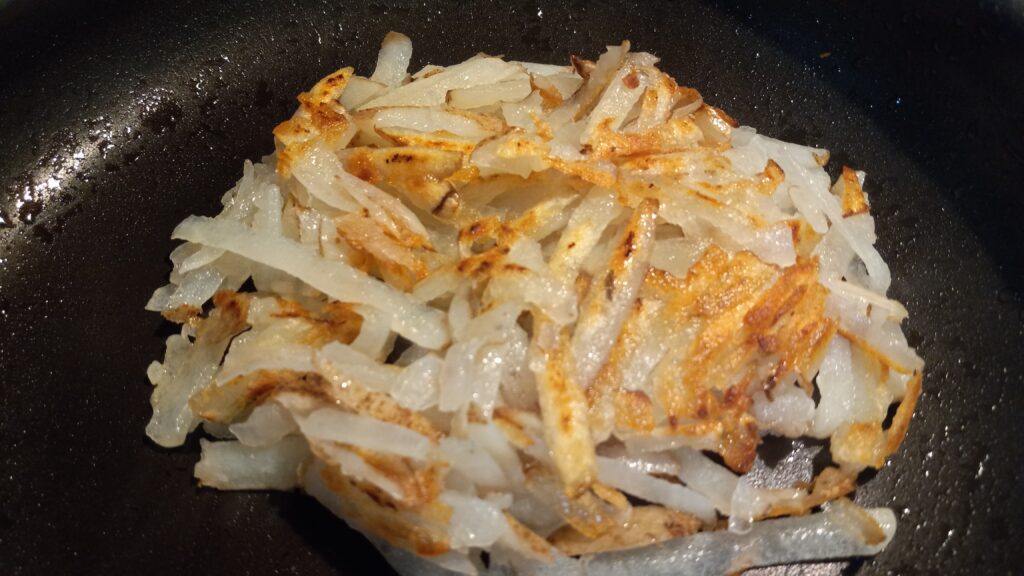
When it comes to certain dishes, nothing evokes satisfaction–be it at a comfy diner or in a fine steakhouse–like digging into a mounded round of perfectly balanced and seasoned hash browns. That first hefty forkful and bite of crispness, followed by a tender interior of potato, all combining in the mouth, makes the day go just a little bit easier–a hearty and fulfilling thing it is.
Every chef and cook on the internet have their own standard recipe and numerous websites trumpet the “true secret” to making great hash browns, like they’ve just found the Holy Grail. I’ve got a better method, discovered through years of trial-and-error in a search that captures what a true potato needs to be in a great hash brown.
BigFood Exposed: Silence IS Agreement
(Editor’s Note: Based upon last-minute discussions, Hy-Vee was offered an exclusive interview with SpokenFood today, before publication of this story. The company declined to participate–sort of. -SN)
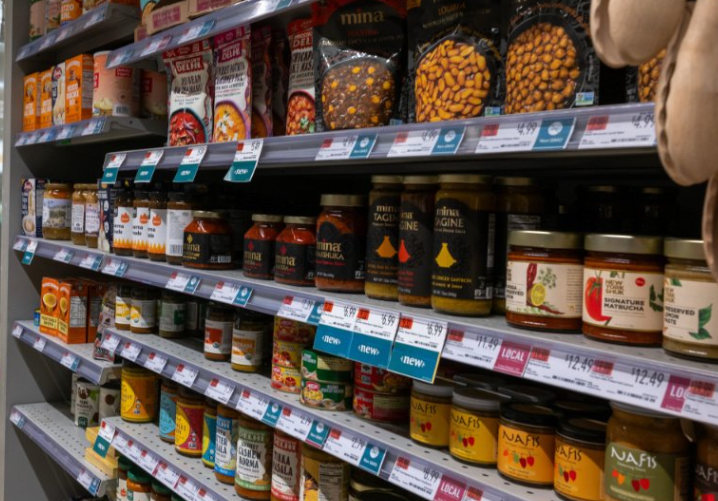
Over the past two weeks, SpokenFood reached out to numerous wholesale food distributors representing retail grocery stores, namely the ones pictured above. We asked the question everyone in America has been wondering:
“Why do your food prices keep rising?”
SpokenFood recently researched ‘Food-At-Home’ costs from the Bureau of Labor Statistics (BLS) as part of the Consumer Price Index (CPI). We put their numbers side-by-side on a chart with updated diesel fuel prices. See that chart below. It jumps out at you.
In the course of reporting this story, SpokenFood contacted those four distributors. Their replies became a pattern—one of silence, delay, and even outright error-in-fact.
There’s Still Summer Freshness To Enjoy
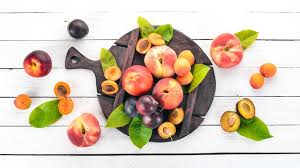
Late August is a fleeting moment in the food calendar—a sweet spot between summer’s abundance and autumn’s heartier fare. It’s a time when the markets are bursting with peak-season produce, yet the whisper of fall is just around the corner. Here are some of the best things to eat before September’s cooler winds change the menu.
Tomatoes at Their Peak
Nothing beats a late-August tomato—deep red, sun-warmed, and impossibly juicy. Slice them thick for BLTs or any fab sandwich, make a beautiful tomato-and-asparagus-salad, or roast them low and slow to bottle up that last taste of summer sunshine in an unforgettable salsa!
Sweet Corn, Still Fresh from the Field
By August, corn is as sweet as it gets. Whether you grill it with butter and herbs, shave kernels into salads, or stir them into chowder, this is the moment to indulge before the fields turn over. Even then, sweet corn shaved off the cob and frozen still tastes awesome in January, when your holiday food hangover is finally gone.
Our Phones Don’t Work!
I’ve been reporting for a long time. Decades. But this is a first. “The phones don’t work,” (and apparently, neither do their emails). What?! A large, billion-dollar wholesale food supplier to the restaurant industry–you’d know the names of the restaurants they serve–told us on Friday that a certain individual at their company has been having […]
Walmart Great Value Shrimp Pulled by FDA for Possible Radiation Exposure
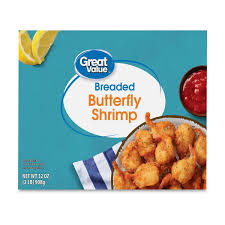
The U.S. Food and Drug Administration has pulled all of Walmart’s Great Value frozen breaded shrimp after a processor in Indonesia had its shipments intercepted at U.S. ports earlier this month and does not believe any product has entered commerce here in the U.S.
The FDA is now urging consumers to avoid certain lots of the frozen shrimp brand after traces of radioactive cesium-137 were detected in imports from PT. Bahari Makmur Sejati (BMS Foods), a seafood processor located in the Modern Cikande Industrial Estate in Serang, Banten province.
Jacques Pepin Celebrates a Milestone Birthday

He’s an American Culinary Legend – all caps.
Jacques Pépin is one of those rare figures who embodies both the Old-World traditions of French cuisine and the wide-open spirit of American food culture. Born in Bourg-en-Bresse, France in 1935, Pépin was raised in his parents’ small restaurant, where he absorbed the rhythms of the kitchen from an early age.
By 13, he was already an apprentice, learning the precise techniques that would carry him to Paris and, later, to the kitchens of French presidents – yes, Jacques Pepin cooked for Charles de Gaulle at the age of 24. That early grounding was important, but what has defined Pépin in the American imagination is not his pedigree—it’s the way he chose to share it. Pepin is not only a genius culinarian–he teaches food and cooking at a professor-level–it’s like morphing Beethoven and Cezanne into one person.
Arriving in the United States in the late 1950s, Pépin could have remained a restaurant chef, building an elite